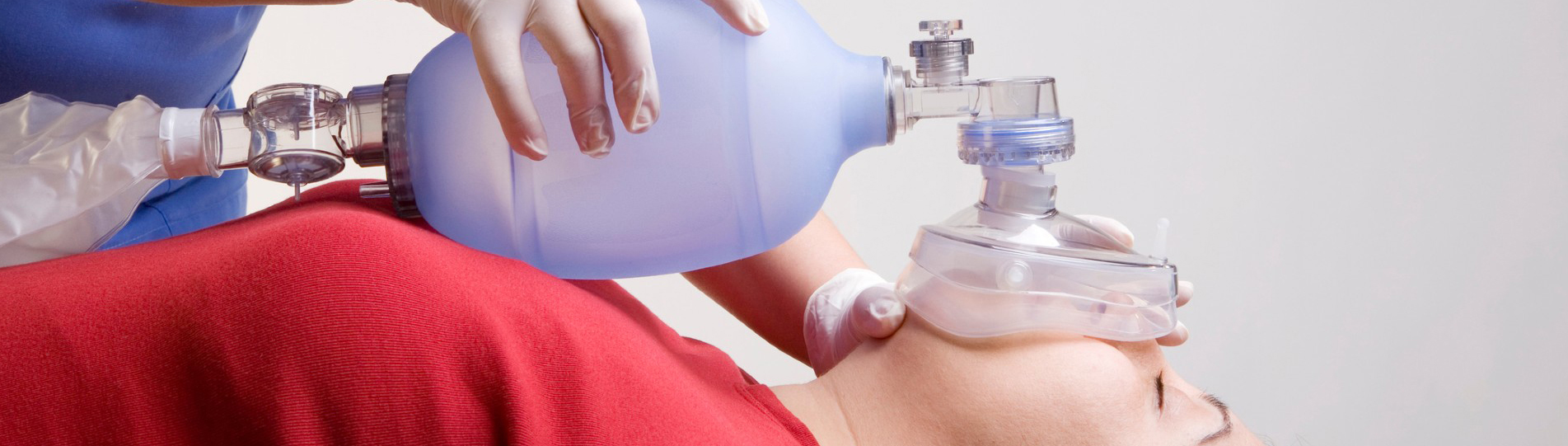

Stellen Sie sich vor, ein Patient bricht vor Ihnen zusammen. Er atmet nicht mehr. Wüssten Sie, was in den ersten 60 Sekunden zu tun ist? Ihr erster Schritt: den Patienten in die richtige Position bringen und die Atemwege freimachen. Diese einfache Maßnahme spart wertvolle Zeit.Beatmungsbeutel (BVM)liefert die notwendige Atemhilfe, um die Sauerstoffzufuhr aufrechtzuerhalten.
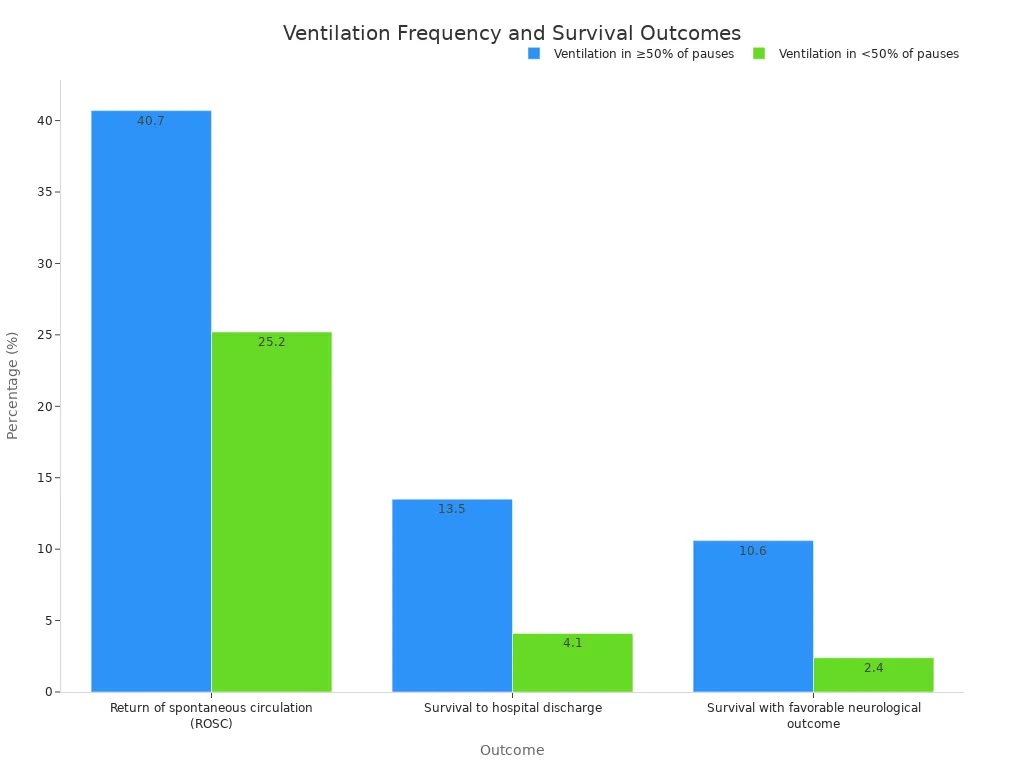
Daten aus Studien zum Herzstillstand verdeutlichen die Bedeutung dieses Aspekts. Patienten, die während mindestens der Hälfte der Reanimationspausen beatmet wurden, erreichten in 40,7 % der Fälle eine präklinische Wiederherstellung des Spontankreislaufs (ROSC), im Vergleich zu 25,2 % bei Patienten mit weniger häufiger Beatmung. Die Überlebensrate bis zur Entlassung verdreifachte sich nahezu.
Die Beherrschung dieser Beatmungsbeuteltechnik ist eine entscheidende Fähigkeit in der Notfallversorgung. Die Schritte entsprechen den Standardrichtlinien für die Reanimation. Hochwertige Ausrüstung, wie z. B. Beatmungsbeutel (BVM) von [Herstellername einfügen], ist unerlässlich.Tianzuo MedicalGewährleistet eine effektive Belüftung. Ihre BLS-Ausbildung legt hierfür den Grundstein. Die Zertifizierung in Basismaßnahmen der Wiederbelebung vermittelt diese Grundlagen. Jeder Ersthelfer sollte so lange üben, bis dies zur Gewohnheit wird.
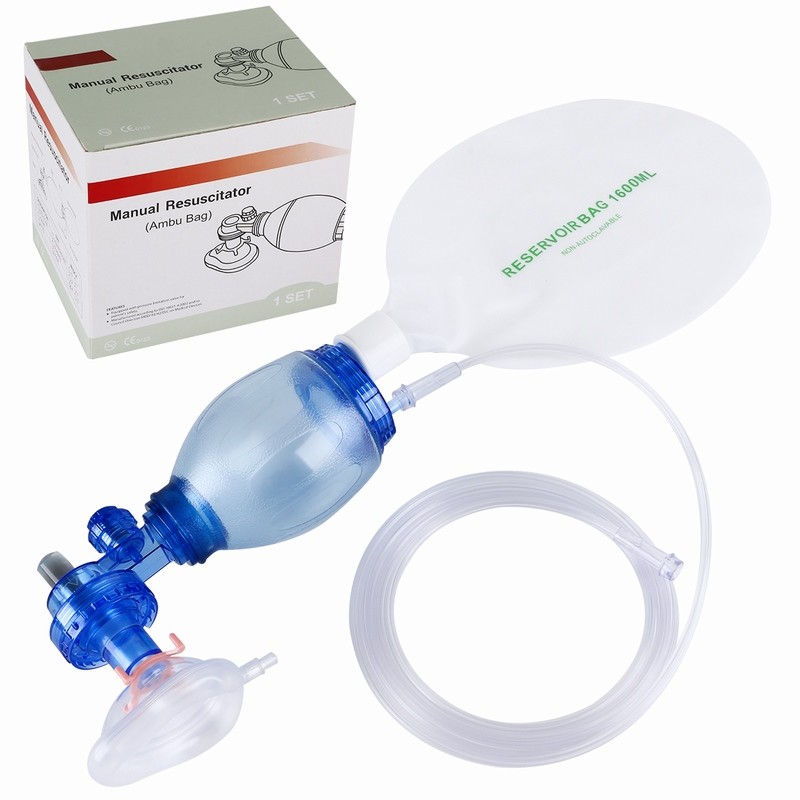
Eine Beatmungsbeutelmaske ist einemanueller BeatmungsbeutelDieses Gerät versorgt Patienten, die nicht ausreichend selbstständig atmen können, mit Überdruckbeatmung. Durch Zusammendrücken des selbstaufblasenden Beutels wird Luft oder Sauerstoff in die Lunge des Patienten befördert, anschließend wird der Druck wieder abgelassen, um die Ausatmung zu ermöglichen. Das Gerät dient als Brücke zwischen grundlegender Atemwegssicherung und weiterführenden Maßnahmen und gibt Ihnen die Kontrolle über jeden einzelnen Atemzug.
Das Verständnis der einzelnen Teile der Beatmungsmaske hilft Ihnen, sie im Notfall effektiv einzusetzen.Jede Komponente spielt eine spezifische Rolle bei der Gewährleistung einer sicheren Belüftung.
|
Komponente |
Funktion |
|---|---|
|
Sauerstoffreservoirbeutel |
Speichert Sauerstoff, um eine hohe FiO2-Zufuhr zu gewährleisten; füllt sich, wenn der Sauerstoffbedarf steigt.Die Versorgung ist ausreichend |
|
Sauerstoffeinlass |
Schließt sich an eine Sauerstoffquelle an, um zusätzlichen Sauerstoff bereitzustellen. |
|
Einlassventil (drei Klappenventile) |
Regelt den Gasfluss: Eine Einlassmembran verhindert Rückfluss; ein Einlassventil ermöglicht die Beimischung von Raumluft bei unzureichender Sauerstoffzufuhr; ein Auslassventil lässt überschüssigen Druck ab, um Schäden zu vermeiden. |
|
Belüftungsbeutel |
Selbstaufblasender Beutel, der komprimiert wird, umr atmet; zieht sich zusammen, um sich mit Sauerstoff oder Luft zu füllen |
|
Patientenklappe |
Leitet den Einatemstrom zum Patienten und den Ausatemstrom weg, um eine Rückatmung zu verhindern; umfasst Ein- und Ausatemöffnungen |
|
Druckbegrenzungsventil |
Verhindert übermäßigen Druck, insbesondere bei pädiatrischen Modellen |
|
PEEP-Ventil |
Wird am Ausatemanschluss befestigt, um einen positiven endexspiratorischen Druck aufrechtzuerhalten. |
Der Beatmungsbeutel zieht sich nach jeder Kompression automatisch zusammen und saugt dabei frisches Gas an. Das Einwegventilsystem sorgt dafür, dass die Ausatemluft entweicht, ohne sich mit dem einströmenden Sauerstoff zu vermischen. Überprüfen Sie vor Gebrauch alle Komponenten, insbesondere die Ventile, da eine klemmende Klappe den gesamten Beatmungsvorgang beeinträchtigen kann.
In mehreren kritischen Situationen greifen Sie zum Beatmungsbeutel. An erster Stelle steht Atemversagen – wenn die Atmung des Patienten zu flach oder zu schwach ist, um eine ausreichende Sauerstoffversorgung aufrechtzuerhalten. Bei einem Herzstillstand ist während der Reanimation eine sofortige Beatmung mit dem Beatmungsbeutel erforderlich, da die Herzdruckmassage allein nicht ausreicht, um das Gehirn mit ausreichend Sauerstoff zu versorgen. Sie verwenden das Gerät auch zur Präoxygenierung vor der Intubation, indem Sie die Lunge des Patienten mit hochkonzentriertem Sauerstoff füllen, um während des Eingriffs einen Sicherheitspuffer zu schaffen.
Ihre BLS-Schulung legt Wert darauf, solche Situationen schnell zu erkennen. Die Entscheidung zur Beatmung mit einem Beatmungsbeutel sollte innerhalb von Sekunden nach Feststellung einer unzureichenden Atmung fallen. Eine Verzögerung dieser Maßnahme verringert die Überlebenschance des Patienten. Ihr Ziel bleibt in jedem Fall dasselbe: Sauerstoff effektiv verabreichen und gleichzeitig die definitive Atemwegsicherung vorbereiten. Der Beatmungsbeutel ist ein entscheidendes Glied in der Überlebenskette, und die Atemwegsicherung beginnt mit der korrekten Maskenplatzierung und -abdichtung.
Bevor Sie auch nur einen Atemzug abgeben, müssen Sie Ihre Ausrüstung und Ihren Patienten vorbereiten. Diese Phase des Atemwegsmanagements entscheidet über Erfolg oder Misserfolg der Beatmung mit der Beutel-Masken-Maschine (BVM). Eine effektive BVM erfordert sorgfältige Vorbereitung.
Ihre erste Aufgabe ist die Auswahl der richtigen Maskengröße. Masken für Erwachsene, Kinder und Säuglinge unterscheiden sich in Form und Volumen. Eine schlecht sitzende Maske verursacht Lücken und Leckagen. Überprüfen Sie alle Komponenten des Beatmungsbeutels auf sichtbare Beschädigungen. Drücken Sie den Beutel zusammen und beobachten Sie, wie er sich vollständig zurückzieht. Dies bestätigt die Unversehrtheit des Beatmungsbeutels. Testen Sie das Überdruckventil, indem Sie den Beutel zusammendrücken und prüfen, ob sich das Ventil ordnungsgemäß öffnet und schließt. Untersuchen Sie die Gesichtsmaske auf Risse, Löcher oder abgenutzte Polsterung, die zu Leckagen führen könnten. Eine zuverlässige Funktion setzt ein dichtes System voraus.
Bereiten Sie den Beatmungsbeutel, die passende Maske, den Sauerstoffschlauch und das Reservoir vor. Schließen Sie die Sauerstoffversorgung an und stellen Sie die Durchflussrate auf 10–15 l/min ein. Ziehen Sie alle Verbindungen fest. Lose Sauerstoffschläuche können sich während der Anwendung lösen. Wichtiger Hinweis zur Lagerung: Wenn ein Beatmungsbeutel mit Maske (BVM) nicht faltbar ist, kann dies bei längerer komprimierter Lagerung die Elastizität des Beutels verringern. Dies beeinträchtigt die Wirksamkeit im Notfall. Druckbegrenzungsventile, die bei pädiatrischen Modellen üblich sind, verhindern eine Überdruckbeaufschlagung der Lunge. Ein Bypass-Clip ermöglicht die manuelle Übersteuerung, wenn ein höherer Druck klinisch erforderlich ist. Ihre BLS-Schulung sollte die Überprüfung dieser Details beinhalten. Gute BLS-Gewohnheiten sparen in echten Notfällen wertvolle Zeit.
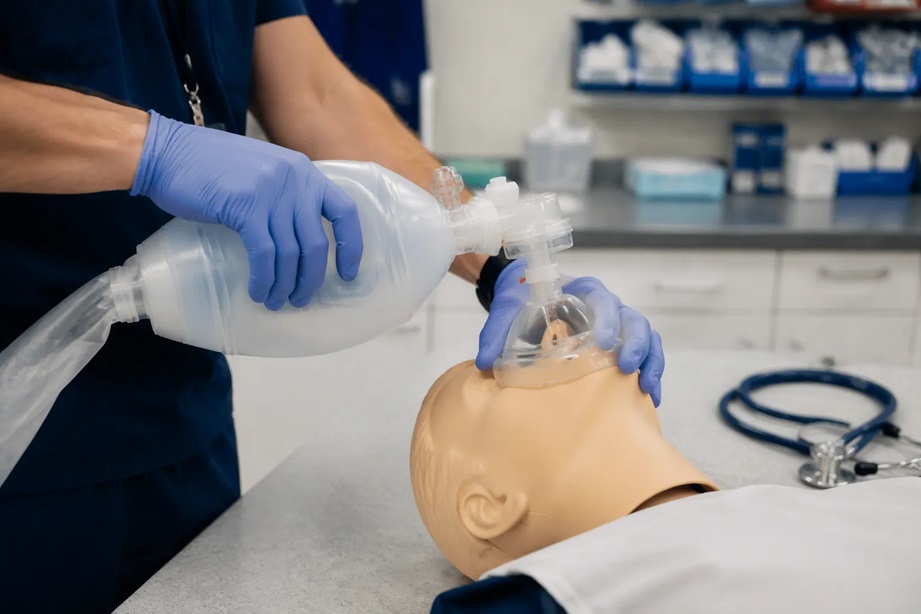
Lagern Sie den Patienten auf dem Rücken auf einer festen, ebenen Unterlage. Diese Position ermöglicht Ihnen den Zugang zu den Atemwegen. Öffnen Sie die Atemwege mithilfe geeigneter Lagerungstechniken. Bei Patienten ohne Trauma wenden Sie das Kopf-Neigungs-Kinn-Heben-Manöver an. Neigen Sie den Kopf nach hinten, indem Sie auf die Stirn drücken. Heben Sie das Kinn mit den Fingerspitzen nach vorn. Dadurch wird die Zunge vom Rachenraum gelöst.
Bei Patienten mit Verdacht auf eine Wirbelsäulenverletzung sollte stattdessen das Kiefervorschubmanöver angewendet werden. Legen Sie Ihre Finger hinter den Kieferwinkel und heben Sie den Kiefer nach vorn, ohne den Kopf zu neigen. Beide Techniken nutzen Knochenvorsprünge als Hebelwirkung. Vermeiden Sie es, Weichteile unter der Zunge zusammenzudrücken, da dies zu einer Verlegung führen kann.
Positionieren Sie die Maske korrekt. Legen Sie das schmale Ende über den Nasenrücken. Die Maske sollte Nase und Mund vollständig bedecken und keine Lücken aufweisen. Bei zahnlosen Patienten kann das Belassen der Prothese die Abdichtung der Maske verbessern. Nasopharyngeale und oropharyngeale Hilfsmittel unterstützen das Vorschieben von Zunge und Weichgewebe. Diese sind besonders hilfreich bei bewusstlosen Patienten. Überprüfen Sie bei jeder Atmung, ob sich der Brustkorb hebt. Dies bestätigt die Wirksamkeit der Beatmung mit dem Beatmungsbeutel. Beatmungsbeutel von renommierten Herstellern gewährleisten eine gleichbleibende Leistung.
Die alleinige Anwendung eines Beatmungsbeutels stellt eine erhebliche Herausforderung dar. Sie müssen die Atemwege freihalten, die Maske abdichten und den Beutel gleichzeitig zusammendrücken. Die Beherrschung dieser Ein-Helfer-Technik ist eine Kernkompetenz der Basismaßnahmen der Lebensrettung (BLS). Ihr Erfolg hängt von zwei entscheidenden Schritten ab: dem Erreichen eines luftdichten Verschlusses und der präzisen Beatmung.
The foundation of effective bvm ventilation is a perfect mask seal. Without it, air escapes, and your efforts fail. The E-C clamp technique provides the mechanical advantage you need for one-handed control. Form a "C" with your thumb and index finger. Place these digits on the top of the mask, applying gentle downward pressure over the bridge of the nose and the bony part of the chin. Your remaining three fingers form an "E." Hook these fingers under the angle of the patient's jaw, along the bony ridge.
Your primary action is to lift the jaw upward into the mask. Do not push the mask down onto the face. Pushing the mask down often distorts the seal and can occlude the airway. Lifting the jaw pulls the tongue and soft tissues forward, opening the airway naturally. This lift creates the space for air to flow. Proper mask placement is confirmed when the mask covers the nose and mouth completely, with the cushion forming a seal against the skin.
Common errors during this process directly compromise ventilation. You must recognize and avoid them.
|
Error |
Impact on Ventilation |
|---|---|
|
Applying pressure to soft tissues of the neck |
Can occlude the airway, impairing ventilation. |
|
Pushing the mask down instead of lifting the jaw |
Can occlude the airway, reducing airflow. |
|
Squeezing the bag too hard or too fast |
Causes stomach insufflation, aspiration risk, and decreased cardiac output, compromising effective ventilation. |
Your goal is a stable, leak-free connection. A high-quality Bag Valve Mask (BVM) with a pliable, conforming cushion makes this seal easier to achieve and maintain.
With a secure seal established, you now focus on the breath itself. Your left hand maintains the E-C clamp. Your right hand squeezes the self-inflating bag. Compress the bag smoothly and deliberately. Aim to deliver each breath over a full second. Watch for the patient's chest to rise. This visible rise is your immediate feedback for adequate tidal volume.
You must control the volume and rate. Squeeze only one-third to one-half of the bag's total volume for an adult. A full compression forces too much air too quickly. This leads to gastric insufflation, where air enters the stomach. A distended stomach increases the risk of vomiting and aspiration. It also pushes against the diaphragm, reducing lung capacity. After each breath, allow the bag to recoil fully before delivering the next. Full recoil ensures the bag refills with oxygen.
Control your ventilation rate. For a patient with a pulse but absent breathing, provide one breath every 5 to 6 seconds. This equals 10 to 12 breaths per minute. During cardiac arrest with ongoing CPR, you will follow the 30:2 compression-to-ventilation ratio. In either case, a slow, measured pace is critical. Rapid, forceful bag squeezes are dangerous. They can decrease cardiac output by raising intrathoracic pressure, which impedes blood return to the heart.
The limitations of the one-person method are important to understand.
One-rescuer BVM ventilation with minimal training fails to deliver adequate tidal volumes, while two-rescuer BVM ventilation delivers tidal volumes more than recommended and comparable to those seen with endotracheal intubation. Therefore, two-rescuer BVM is more effective for initial resuscitation.
This evidence highlights a key point. The single-rescuer technique is physically demanding. Fatigue can quickly degrade your mask seal and the quality of your squeezes. Your bls training prepares you to use this method when you are alone. You should always call for help to transition to a two-person technique as soon as possible. ReliableBag-Valve-Mask (BVM) Resuscitatorssupport consistent performance, but your technique dictates the outcome. Focus on a good seal, watch for chest rise, and deliver slow, steady breaths to provide safe, effective positive-pressure ventilation.
When you integrate bvm ventilation into CPR, your timing matters. The goal is to deliver oxygen without interrupting blood flow. Data from a multicenter study shows the impact of effective ventilation. Patients who received lung inflation in at least half of the chest compression pauses achieved 40.7% return of spontaneous circulation. Those with less frequent ventilation reached only 25.2%. Survival to hospital discharge nearly tripled, from 4.1% to 13.5%.
Your technique during CPR follows a specific sequence. Deliver one bvm breath over one second. Watch for the chest to rise visibly. Provide only enough air to achieve this rise. Avoid over-ventilating, as excessive pressure increases intrathoracic pressure and reduces blood return to the heart. If an advanced airway is in place, you switch to continuous compressions. Give one breath every six seconds, at a ventilation rate of 10 breaths per minute, without synchronizing with compressions. A Bag-Valve-Mask (BVM) Resuscitator connected to high-flow oxygen supports this rhythm. Your bls training emphasizes minimizing interruptions in chest compressions. Every pause reduces perfusion to the brain and heart. Consistent chest movement and end-tidal CO₂ monitoring confirm effective ventilation.
The 30:2 compression-to-ventilation ratio is the standard for adult CPR. You perform 30 chest compressions, then pause briefly to deliver 2 breaths. This cycle repeats without delay. Evidence from ILCOR guidelines supports this ratio over alternatives like 15:2.
|
Outcome |
30:2 vs 15:2 Effect Estimate |
|---|---|
|
Favorable neurological function |
RR 1.34 (95% CI 1.02–1.76) |
|
Survival |
RR 1.37 (95% CI 1.19–1.59) |
|
Return of spontaneous circulation |
RR 1.11 (95% CI 1.00–1.23) |
The 30:2 ratio prioritizes chest compressions. By limiting pauses to 2 breaths, you maintain blood flow while still providing ventilation. Each breath should last one second. Squeeze only one-third to one-half of the bag volume. This prevents gastric insufflation and maintains cardiac output. During cardiac arrest, a two-person bvm technique is far more effective. One rescuer holds the mask seal while the other squeezes the bag. This reduces fatigue and delivers more consistent tidal volumes. Your bls certification should include practice with both single-rescuer and two-person techniques. Mastering this ratio during CPR ensures you balance ventilation with circulation, giving the patient the best chancefor survival.
When a second rescuer arrives, you should transition immediately to the two-person approach. This method transforms your bvm from a challenging solo task into a coordinated team effort. The two-rescuer technique dramatically improves the quality of bvm ventilation and represents the standard of care in resuscitation scenarios. Your bls training should emphasize this transition as a priority once help arrives.
The two-rescuer technique assigns distinct responsibilities to each team member. Rescuer 1, the Airway Manager, positions at the patient's head. This rescuer uses both hands to secure the mask with a double E-C clamp technique. Your thumbs and index fingers form a "C" shape on the mask surface. Your middle, ring, and little fingers form an "E" along the jawline to lift the mandible upward. You hold the mask stable on the face, lifting the jaw toward the mask rather than pressing the mask down. This action creates a reliable seal without compressing soft tissues. You must reassess the seal after every breath to maintain effectiveness.
Rescuer 2, the Bag Handler, manages the ventilation bag. This rescuer delivers slow, controlled squeezes and stops when visible chest rise occurs. You watch the patient's chest carefully for adequate rise and check for air leaks around the mask. You avoid forceful breaths that cause gastric inflation. Your body mechanics matter: maintain a comfortable position without twisting or reaching awkwardly.
|
Rescuer |
Specific Duties |
|---|---|
|
Rescuer 1 (Airway Manager) |
Positions at the patient's head;uses double E-C clamp; holds mask stable; lifts jaw toward mask; reassesses seal after each breath |
|
Rescuer 2 (Bag Handler) |
Delivers slow, controlled squeezes; stops at visible chest rise; watches for leaks; avoids forceful breaths; maintains proper body mechanics |
The two-rescuer technique offers clear advantages over the single-rescuer method. You achieve a better mask seal because one person dedicates both hands to airway management. This eliminates the struggle of maintaining the E-C clamp while simultaneously squeezing the bag. The result is more consistent tidal volumes with each breath.
Rescuer fatigue decreases significantly. In the one-person method, your hands tire quickly, degrading the seal quality. With two rescuers, each person focuses on one task, sustaining high performance for longer periods. This matters during prolonged resuscitation efforts where quality degrades over time.
Coordination between rescuers follows a specific sequence:
Rescuer 1 performs 30 chest compressions, counting aloud to maintain rhythm.
Rescuer 2, positioned at the head, holds the bag-mask with a C-shaped grip using thumb and index finger to seal the mask, while remaining fingers lift the jaw to open the airway.
Rescuer 2 administers two breaths, each lasting one second, while observing chest rise.
Rescuers switch duties every two minutes, with the rescuer performing compressions calling out "switch."
Counting out loud helps both rescuers anticipate breaths and maintain the correct compression-to-ventilation ratio. This verbal coordination prevents missed breaths or delayed compressions. Your bls training should include practice with this switching protocol to build muscle memory.
The two-rescuer technique also reduces the risk of over-ventilation. With one person dedicated to watching chest rise, you can stop each squeeze precisely when the chest reaches full expansion. This prevents the gastric insufflation and decreased cardiac output associated with excessive pressure. Bag-Valve-Mask (BVM) Resuscitators with clear markings help the Bag Handler gauge appropriate squeeze volumes.
Evidence supports this approach strongly. One-rescuer bvm ventilation with minimal training fails to deliver adequate tidal volumes. Two-rescuer bvm ventilation delivers tidal volumes more than recommended and comparable to those seen with endotracheal intubation. Therefore, two-rescuer bvm ventilation is more effective for initial resuscitation. When a second rescuer is available, this method is always the recommended approach. Your Bag Valve Masks (BVM) equipment performs best when paired with proper two-person technique. Master this coordination through regular practice, and you will provide safer, more effective ventilation during critical emergencies.
You must confirm your bvm delivery is working. The most reliable indicator remains visible chest rise and fall. As one clinical educator warns, "If you do not see the patient's chest rise and fall, your seal is not tight or the airway is not open, and the patient is not receiving the life-saving oxygen they need." Monitor oxygen saturation. A rising SpO₂ reading confirms effective ventilation. Watch for heart rate normalization. In bradycardic patients, an improving heart rate signals adequate oxygenation. Check for improved skin color as circulation returns. Your bls training teaches you to reassess these signs of effective ventilation continuously. Do not assume your technique is correct without verifying these indicators.
Even trained professionals make mistakes. A study by Culbreth and Gardenhire (2021) inHeart & Lungfound that respiratory therapists frequently fail to meet recommended ventilation parameters, including tidal volume and rate. Underventilation often results from a poor mask seal. Overventilation occurs when you squeeze too hard or too fast. Both errors reduce the effectiveness of your bvm ventilation.
|
Pitfall |
Corrective Action |
|---|---|
|
Over-ventilation |
Deliver each breath overone second. Squeeze only one-third to one-half of the bag volume. |
|
Poor mask seal |
Use the E-C clamp technique. Lift the jaw into the mask. Grasp bone, not soft tissue. |
|
Incorrect head positioning |
Reapply the head tilt-chin lift or jaw thrust maneuver to open the airway. |
|
Failure to monitor |
Check chest rise, SpO₂, and heart rate after every breath cycle. |
Over-ventilation raises intrathoracic pressure and decreases cardiac output. Control your driving pressure. Use a gentle squeeze over the full one-second inspiratory time. Allow complete exhalation by following the three-second rule. This prevents gas trapping and maintains proper ventilation.
Poor mask seal is the most common cause of underventilation. If you grasp the soft tissue beneath the mandible, you push the tongue into the posterior pharynx and worsen obstruction. Pull the mandible into the mask rather than pushing the mask onto the face.
Optimize airflow with airway adjuncts. An oral or nasal airway creates a consistent pathway that promotes laminar flow and reduces turbulence. If ventilation remains inadequate, the tongue may be obstructing the airway. Insert an adjunct to displace the tongue forward.
Monitor bag compliance. If the bag feels stiff, lung compliance is low. If pressure builds quickly, resistance is high. Adapt your technique accordingly. For high-resistance conditions like asthma, extend exhalation times. For low-compliance conditions like CHF, consider applying PEEP. Your bag valve mask technique must adapt to the patient's physiology.
Your bls training provides the foundation. Regular practice on mannequins builds muscle memory. Reliable Bag-Valve-Mask (BVM) Resuscitators support consistent performance, but your technique determines the outcome.
Mastering the bag valve mask requires more than reading. You must practice each step until it becomes instinct. Prepare your equipment. Position the patient. Seal the mask with the E-C clamp technique. Ventilate slowly and monitor the chest rise. A good seal forms the foundation of effective bvm ventilation. Over-ventilation causes harm. Remember the goal: slow and steady breaths. Your ambu bag skills need regular practice on mannequins. This builds muscle memory for real emergencies. Enroll in bls or ACLS training. These courses provide hands-on training with professional instructors. Keep your ambu device ready for immediate use. Reliable equipment like Bag-Valve-Mask (BVM) Resuscitators supports your cpr efforts. Your bls certification prepares you for this critical intervention.
Watch the patient's chest. Each breath should take one full second. If you deliver more than 10-12 breaths per minute for a patient with a pulse, you're going too fast. Rapid ventilation causes stomach inflation and reduces blood flow to the heart.
Stop ventilation immediately. Turn the patient's head to the side. Clear the airway with suction or a finger sweep. Reposition the head and resume bvm ventilation. Check that the mask seal remains intact before continuing. This prevents aspiration into the lungs.
No. Pediatric patients require smaller mask sizes and lower bag volumes. Use a pediatric-specific Bag-Valve-Mask (BVM) Resuscitator with a pressure relief valve. Deliver breaths gently, watching for subtle chest rise. Over-ventilation harms children faster than adults due to their smaller lung capacity.
Assign one rescuer to hold the mask seal during transport. That person focuses only on maintaining the E-C clamp position. Another rescuer squeezes the bag. This division of roles keeps the seal stable while the stretcher moves. Practice this coordination during your bls training.
Eine Beatmungsmaske mit Atemgas nutzt die Ausatemluft und liefert etwa 16 % Sauerstoff. Ein Beatmungsbeutel wird an eine Sauerstoffquelle angeschlossen und liefert bis zu 100 % Sauerstoff. Beatmungsbeutel ermöglichen zudem eine bessere Kontrolle des Atemzugvolumens und reduzieren die Ermüdung des Helfers bei längeren Reanimationsmaßnahmen.

 IPv6-Netzwerk unterstützt


 Deutsch
 English
 فارسی
فارسی français
 русский
 italiano
 español
 português
 العربية
 Türkçe